
HSE-OHS-DR : Safety Design & Research
FIRA : Fire Induced Radiological Integrated Assessment
Team Leader: Oriol Rios
Office: 57/2-005
Introduction
Fire safety requirements for CERN facilities are defined by the HSE Unit based on assessments of fire risks and potential radioactive releases resulting from fire. Applying measures solely on a worst-case basis can be costly and may not accurately reflect the actual level of risk.
To address this challenge, the HSE Unit launched the FIRIA (Fire-Induced Radiological Integrated Assessment) project in 2018. Its objective was to develop a quantitative risk assessment methodology for evaluating fire-related risks in facilities containing radioactive materials. Based on ISO 16732-1, the methodology assesses conventional and radiological risks to life, the environment, and property while accounting for the specific characteristics and complexity of each facility.
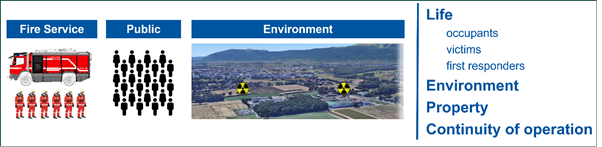
The project is highly multidisciplinary and aims to refine the methodological and physical assumptions in use, supported by testing campaigns as necessary.
The FIRIA project is divided into two phases – phase 1 (2018 – 2021), or the so called “development phase” and phase 2 (2022 – 2025) or the “production phase”.
IMAGE
During the development phase, a quantitative fire risk assessment framework and dedicated IT tools were developed to support the prioritisation of consolidation actions and resource allocation. Drawing on expertise in fire science, CFD, environmental modelling, radiation protection, quantitative risk analysis, and parallel computing, the methodology was validated through two pilot studies.
The production phase concluded in 2024, and the resulting tools and methodologies are now routinely applied across several CERN facilities. Ongoing improvements continue to address identified methodological gaps, including the development of tools for time and information management.
FIRIA is currently classified as an activity, reflecting its long-term and continuing role within CERN.
Core Components
- Quantitative risk based methodology: Uses advanced modeling to simulate realistic fire scenarios based on actual combustible materials present within the facility and accounting for their radiological implications.
- Hazard Identification: Fire hazards are classified by combustible energy, total quantities, and ignitability. Radiological hazards are classified by activation levels through source terms. These factors are combined to identify materials with the highest risk profile.
- Conservative Design Scenarios: Manages uncertainty by modeling credible worst-case scenarios and worst-case variables (e.g., fuel load, proximity to evacuation routes) to evaluate maximum impact against safety goals.
- Facility & Site-Wide Scope: Evaluates risk at the facility level, measuring potential impacts on facility personnel and the public.
- Acceptance Criteria: Defines threshold levels for tolerable conditions and hazardous quantities.
- Consequence Analysis: Assesses performance of the facility and its safety systems against the defined safety thresholds.
- Fire induced consequences: Models fire progression, predicts evacuation safety, estimates impact of fire on property and assesses firefighter intervention conditions.
- Radiological consequences: Models outdoor smoke dispersion and calculates radiation doses to the public to evaluate impacts on life safety, property, and the environment.
- Decision Support: Quantifies the benefits of mitigation measures and incorporates sensitivity and uncertainty analyses to support safety decision-making.
Work Packages
Since the FIRIA project is so multidisciplinary, it was decided to split up the different responsibilities in work packages to identify shortcomings and potential improvements in the ongoing processes. The work packages in FIRIA are the following:
Methodology and Fire Hazards
The FIRIA methodology combines prescriptive standards and performance-based analysis across all lifecycle stages of a facility. It employs a quantitative fire risk assessment based on realistic fire scenarios linked to the combustible materials present in a facility and supported by advanced consequence modelling. Uncertainty is addressed by combining conservative assumptions to maximise potential consequences relative to safety objectives. Sensitivity and uncertainty analyses can further support decision-making.
FIRIA assesses the current risk level of a facility and can quantify the impact of mitigation measures. Risk for each facility level is evaluated as a contribution to CERN’s overall risk, with acceptance criteria currently based on tolerable hazardous quantities.
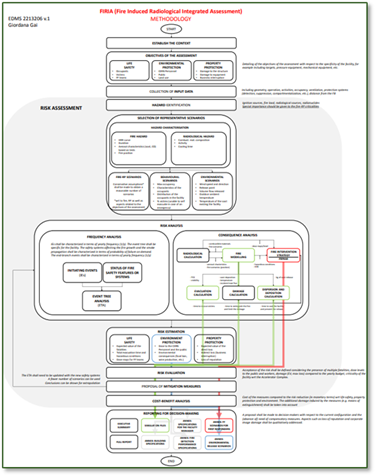
Figure 3. An illustration of the FIRIA methodology
Computing and Simulation
FIRIA utilizes specialized software tools to model fire behavior, evacuation dynamics, and environmental releases:
- Computational Fluid Dynamics (CFD) models to analyze fire behavior and occupant impacts. Fire Dynamics Simulator (FDS)—an open-source, verified, and validated tool—is the primary solver.
- Evacuation modeling to simulate occupant movement using analytical equations for simple spaces or agent-based modeling for complex layouts.
- Outdoor dispersion modelingto estimate radiation doses to the public resulting from potentially radioactive smoke. CFD and Lagrangian particle-based SLAM model for near-field and Gaussian Plume models for far-field dispersion.
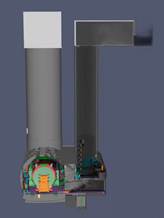
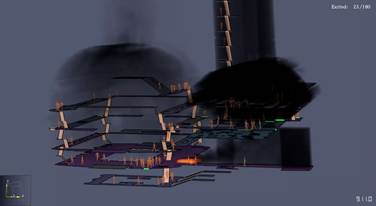
Figure 4. Simulation of a fire in CMS and the occupant evacuation response
Radiological protection Source Term
The radiological protection (RP) source term provides a quantitative description of radioactive material released (or projected to be released) from a facility during routine operations or accident scenarios, specifying release amounts and temporal profiles. Within FIRIA, activation levels and radionuclide inventories for facility combustibles are calculated to establish the baseline for dose assessments and atmospheric dispersion.
Radiological protection Dose Assessment
Evaluates environmental radiological risks from underground fire smoke and soot based on Section SE3 of ENSI G14 (2025), this framework calculates effective doses for representative individuals across four key groups:
- General Public: Members of the public residing within the area of concern.
- Agricultural Population: Local farmers residing in the area who also consume locally produced food.
- Bystanders: Adult workers on CERN sites witnessing a fire event.
- Indoor Occupants: Building occupants exposed to radioactive gases and soot while evacuating.
CERN Fire and Rescue Services (CFRS) Intervention
Establishes safe response strategies for facilities with radiological hazards by evaluating key operational factors:
- Fire detection capabilities, Level 3 alarms, and turnout times.
- Brigade distance, access routes, and critical facility zones.
- RP veto permissions and site intervention plans.
Consequence analysis directly guides tactical decisions: high residual radiation doses may require limiting or eliminating firefighter entry. Operational planning also accounts for smoke containment to prevent environmental contamination and hazardous interior conditions.
FAIR to FIRIA
FIRIA continuously incorporates findings from research collaborations. The FAIR project investigates fire dynamics in horizontal and vertical cable tray fires, underventilated environments and discrete source-target interactions, and hot vitiated atmospheres.
Insights from the OECD FAIR project are currently used to inform hazard identification and scenario selection within FIRIA.
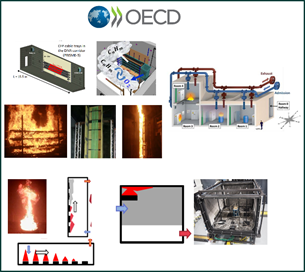
Figure 6. Illustration of the various experimental configurations being tested within the FAIR project