Meet the People – Francesca Luoni
Banner
Meet the people of HSE
Introduction
This series invites you to meet the people behind the jobs in HSE. The stories are available in either English or French, depending on the interviewees' preference.
A big thank you to our colleagues who have contributed to this series. Are you interested in being displayed here? Contact the communications team at hse-comms@cern.ch.
Francesca Luoni
Colliding arts, space, and physics.
This month: meet Francesca Luoni, Radiation Protection physicist for Physics Beyond Colliders projects (HSE-RP-AS).
| 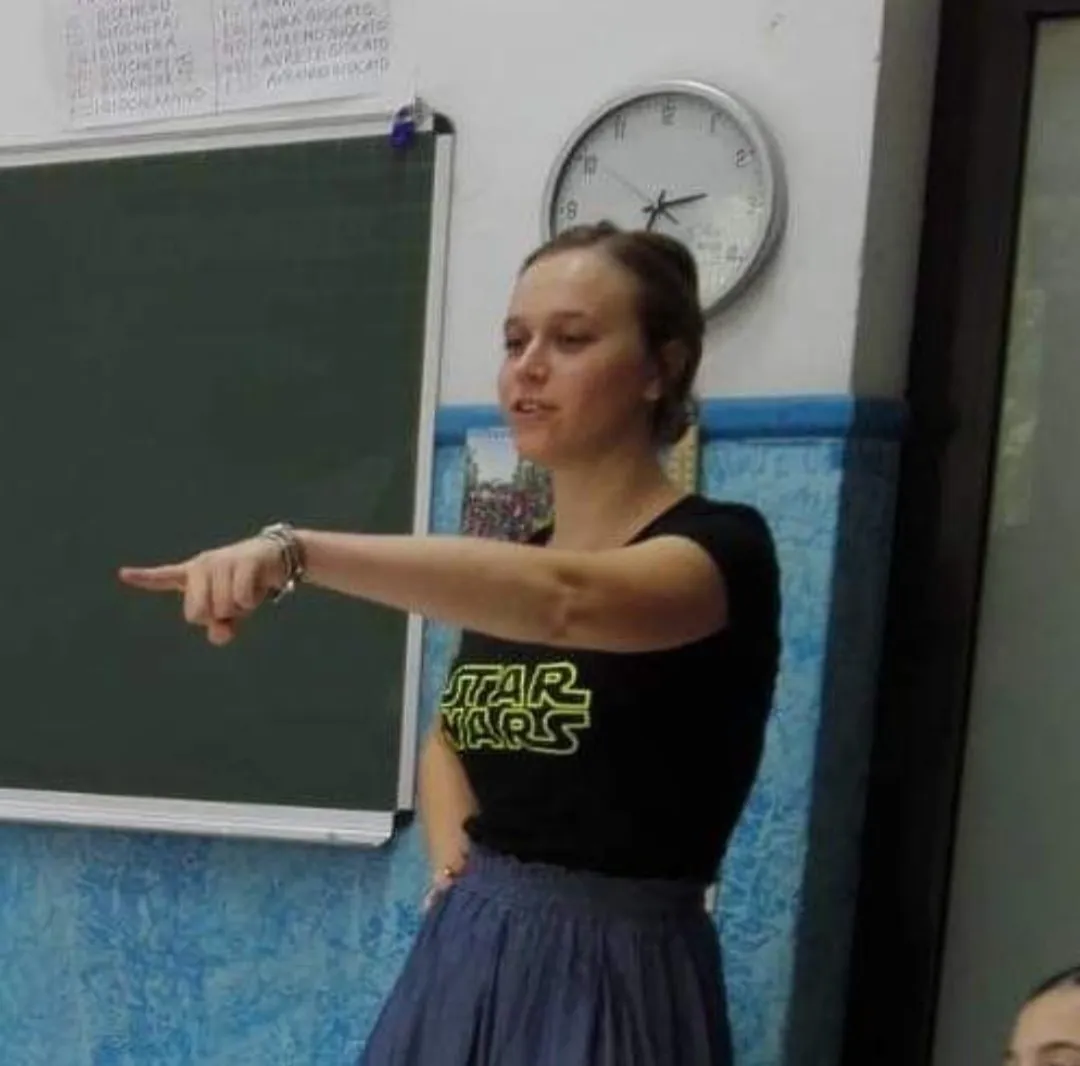 | Francesca Luoni, RP physicist. | Q. Hi Francesca! please introduce yourself and your role here at HSE : FL: Hello! I’m Francesca Luoni, originally from Italy, and I’m currently a fellow working in radiation protection for the physics beyond colliders (PBC) projects. I spend roughly half of my time looking at PBC experiments on the LHC, and the other half on north area experiments at Prévessin. I also love arts, music, and being out in nature, keeping active. Plus, I do a lot of outreach and science communication for anybody who is interested to talk with me! I’m passionate about space, science, and I’m interested in quite a lot of different things actually. | ||
| |||||
Francesca Luoni, RP physicist. |
Q: I look forward to learning what! Tell me about your professional journey…
FL: So, I’m currently a postdoctoral fellow here at CERN. Before this I worked at the German Aerospace Centre near Munich as a master’s student and whilst searching for my PhD.
I got the amazing opportunity, by chance, to study a PhD in a field that I was super passionate about. We were investigating radiation shielding materials to protect people in deep space missions. Space is really my passion, deep space, manned missions, that kind of thing, so I loved what I was doing almost every day!
The PhD was based at the GSI in Darmstadt, a particle accelerator, which we used to recreate the kind of radiation you would experience in space. This means I was very familiar with ‘accelerator life’, let’s say. Plus, I did a lot of simulations using a software called FLUKA, that was developed and is used here at CERN, which is really what brought me here!
Q: Have you always wanted to work in radiation protection? How did you discover that?
FL: Oh, no! Completely by chance. It’s funny… I nearly didn’t study physics at all!
In high school, I chose to specialise in art and ancient languages. In Italy, you can only study science OR humanities subjects, not both! So in this sense it was very unusual for me to end up in physics. We didn’t learn calculus in maths, and I only did two hours a week of physics, compared to nearly a third of my time learning Latin and Greek. So how did I get here?
It was definitely my love of space that brought me to study physics – plus some advice from my dad. This made me start a pathway in engineering physics, which gave me some job security whilst keeping a window open for applied physics routes into the space sector. Though at the time I didn’t think this was possible…
Here I got really into studying nuclear physics, as I could see how it applied to the kinds of cosmic radiation we see in space. I chose to do a Master’s in Nuclear Engineering, which introduced me to higher energy radiation and radiation protection. It was whilst doing my thesis that I got super lucky and landed a project with the German Aerospace Centre in Munich. The project wasn’t very space-based, it was about dust particles in plasmas, but I loved my life there. I think it was here I started to feel at ease with working internationally, too.
In a discussion with my supervisor, they gave me some life changing advice – “how about finding a PhD in the effects of space radiation on biology?”. This pulled together all my interests so well, it made total sense to me, so I decided to start looking!
It took a lot of searching, all over Europe, and I didn’t have any luck for a long time, but after several months, by chance I found this professor in Darmstadt who was doing research about radiation protection in space… AND looking for a PhD student. So exactly what I was looking for!
So here at CERN, I combine the radiation protection knowledge from my PhD with new challenges in extreme high energy radiation and collaborating with people doing entirely new physics. It’s really exciting and interesting!
Q: So here at CERN what do you enjoy? Can you still find a connection to your passions in space?
FL: Yes, absolutely! What I like is that here at CERN, though I’m not directly involved in space right now, I still do get to see things going on in the field nearby. For example, I work opposite the AMS building, measuring antimatter scatter in space, searching for dark matter, which is a pure space-based product based on the ISS. I also do the RP for some slightly more astrophysics themed experiments with PBC that are really cool.
I think collaborating with all these different projects and being involved in cutting edge science at this huge international centre is just as cool and motivating for me. There’s a real buzz. Collaborating on new experiments, I get to meet really inspiring people and learn about the new physics they’re investigating – it can be challenging – but also kind of thrilling to be on the edge of science like this.
Everybody at CERN has the same sense of purpose so it’s a really rewarding environment. Plus, I get to share this picture of science with others, through outreach and communication activities.
Q: So you do a lot of outreach and communication? Tell me about that!
FL: I love it, I do all kinds of things. I work with women in science & technology here, I speak to students, and have given a lesson about radiation at Ecole Internationale de Genève and my old school for example. In Darmstadt I presented my research to high schoolers each year. I’ve also been on the “pint of science” podcasts, I have done interviews on YouTube.
I try to do as much science communication as I can, because it is really useful for my work as well. When you are collaborating with other departments, you have to be really aware of what they know and what they don't know. Some things need explaining from the basics, others are more experienced. It enables you to be a bridge between different specialists when you’re collaborating.
Plus, it gives me so much energy. I come back to work on a real high because I get really excited with the excitement of other people when they hear my work, you know? It’s like a mini holiday refresh!
Q: I can tell it gives you real energy! Do you think your ‘interesting’ background in arts and the classics influences your passion for science communication?
FL: Oh that’s interesting, I’ve actually never thought about this! I mean, I guess I have kept my love for art and literature in my personal life a lot. I don't make art, but I do love arts. So I go to a lot of art exhibitions. I love theatre, I love concerts. I love music. It’s another reason Geneva and CERN are great; they make a real effort to put arts in the picture.
I once got to work with an artist at the GSI in Darmstadt, for a summer arts in science programme. I had the opportunity to get into the processes and see how he did his work. Then to see how his inspiration and message got into the final piece – I was blown away – how people manage to combine these ideas, to make a meaning from connecting these different worlds, is just amazing.
So yes, for sure there’s something there feeding into my communication. I guess it’s also the skills, I do a lot of improvised theatre and I think this also gives you a lot of great communication tools. Theatre, art, language – I travel a lot… It seems all of these things I did in my very formative years are still a big part of my life outside of work now.
Q: Improv, art, science communication, travelling … would you say you have a lot of hobbies?
FL: Haha! I try to do some exercise to keep healthy too, dancing, swimming. Obviously, I really love living in the area and try to go hiking, skiing up in the alps. I was on holiday in the Lofoten islands in Norway recently which was just breathtaking…
Q: Francesca, how do you fit it all in? What’s your secret?
FL: Errrrrr… sometimes I wonder! Okay, no sometimes I do feel like I probably need a bit of a rest.
But I like that here at CERN I have the possibility to achieve a bit of a work life balance. At least in my experience this is something that people understand here. That if at a certain point you work too much without breaks – if you don’t make the time for other things in your life, then you're not creative or motivated any more.
I think being happy in life means you’re happy at work. I’m lucky to also have great colleagues, to work in this amazing place… It’s all part of the same big picture.