

December 2025
Welcome to the HSE Newsletter, which is published twice a year and features some selected highlights for the HSE Department. You can find the other editions here.
We thank the contributors and encourage anyone who has a newsworthy story to share it with us at hse-comms@cern.ch. We will then publish it on the most appropriate channel, including the CERN Bulletin or the HSE website.
Happy reading!
Let there be light: handing over the keys to the new RWTC access & office building
Christmas came early for CERN’s Radioactive Waste Treatment Centre (RWTC) team, with the long-awaited completion of their new access & office building in September 2025, a key element in a project that began more than a decade ago.
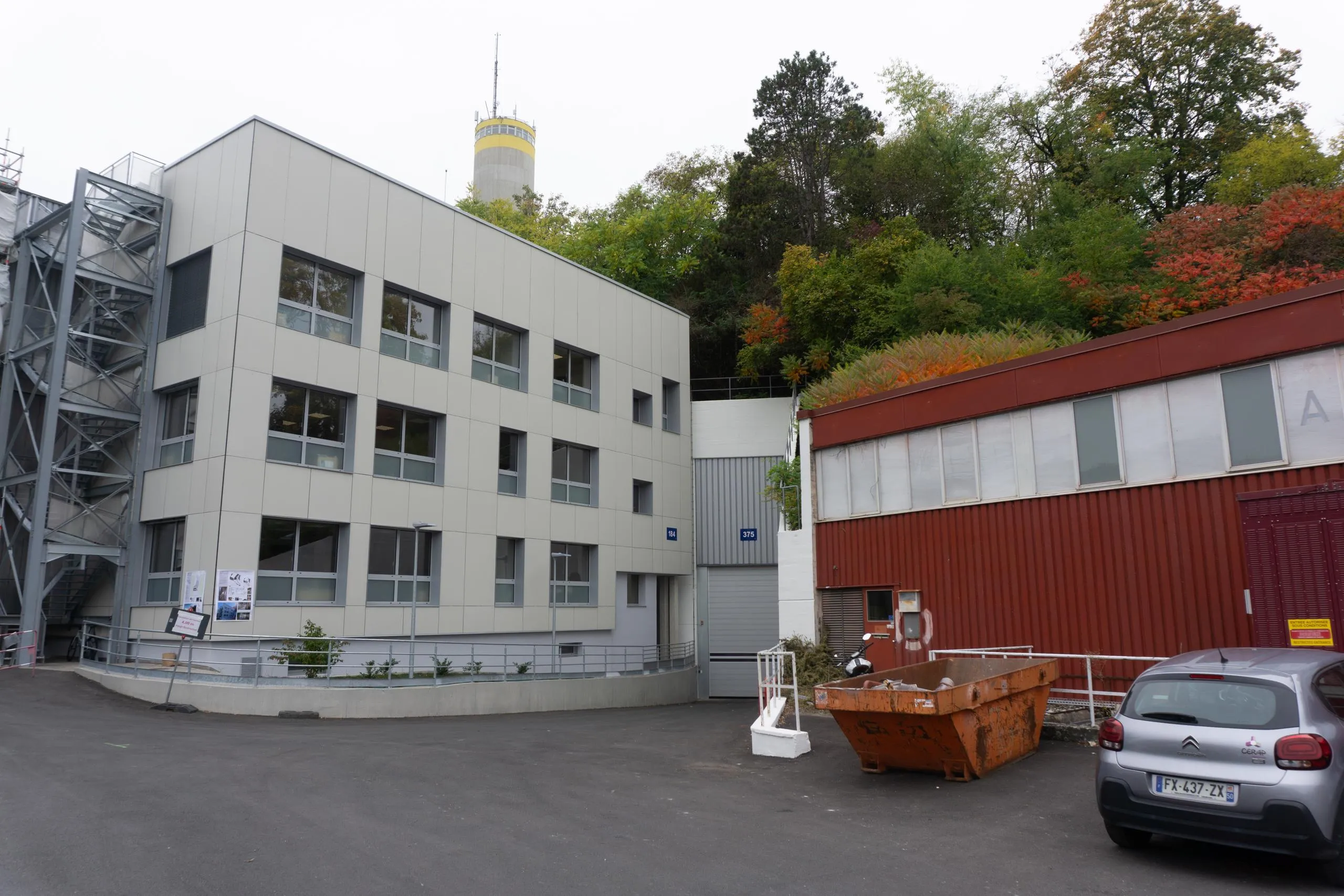
Click to discover the new building…
The story goes back to 2011, when CERN launched an ambitious project to design and build a modern facility for the safe interim storage and treatment of the radioactive waste that is continuously produced by the operation of CERN facilities. This includes everything from simple metallic tubes to complex targets. To be accepted by the RA collection centers in CERN’s Host States, each item must be carefully characterised, sorted, packaged and treated according to elimination pathways agreed with their authorities.
The challenge was to process not only waste that had accumulated over the years but also to accommodate waste produced each year in the LHC era—about 400 m³ during operational periods and up to 1000 m³ during Long Shutdowns—while ensuring a safe and efficient workspace for the dedicated teams behind these operations.
The solution was found with the Intersecting Storage Rings, or ISRs: circular tunnels 15 m width, 6.5 m in height divided into octants. These were already, but only partially used for interim storage, and by 2015 a new radioactive waste treatment centre was successfully implemented in one of them: ISR octant 4, a former experimental hall, 17.5 m high and located 4 m underground, with a useful surface area of 1600 m2. In its first year of operation in 2016, more than 1000 m3 were processed. “Octant by octant” the ISR were made into a up to standards RWTC, with the team simultaneously managing refurbishment and daily operations. As former HSE Unit Head Doris Forkel-Wirth put it, it was like “living in a house while refurbishing every room.” Collaboration with SCE engineers ensured all the necessary infrastructure and processing equipment needs were met as the facility evolved.
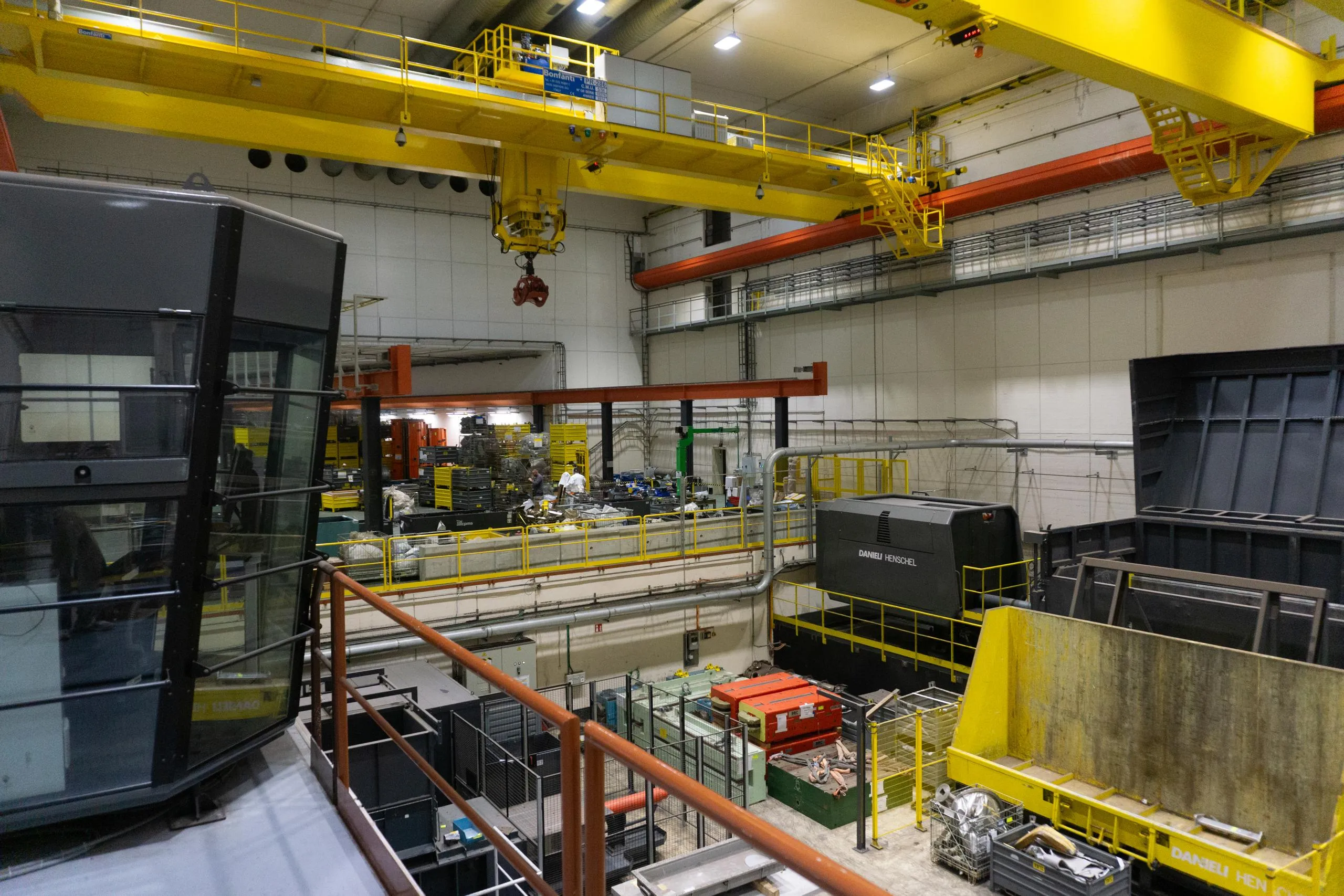
Once the RWTC refurbishment was finished, the green light was given in November 2020 to build a dedicated office building, leveraging existing space connected to the existing facilities, with changing rooms, showers and appropriate secured access from the non-designated to the controlled radiation areas. It was not a straightforward task, but after overcoming diverse technical difficulties, the office building was finally completed in September 2025.
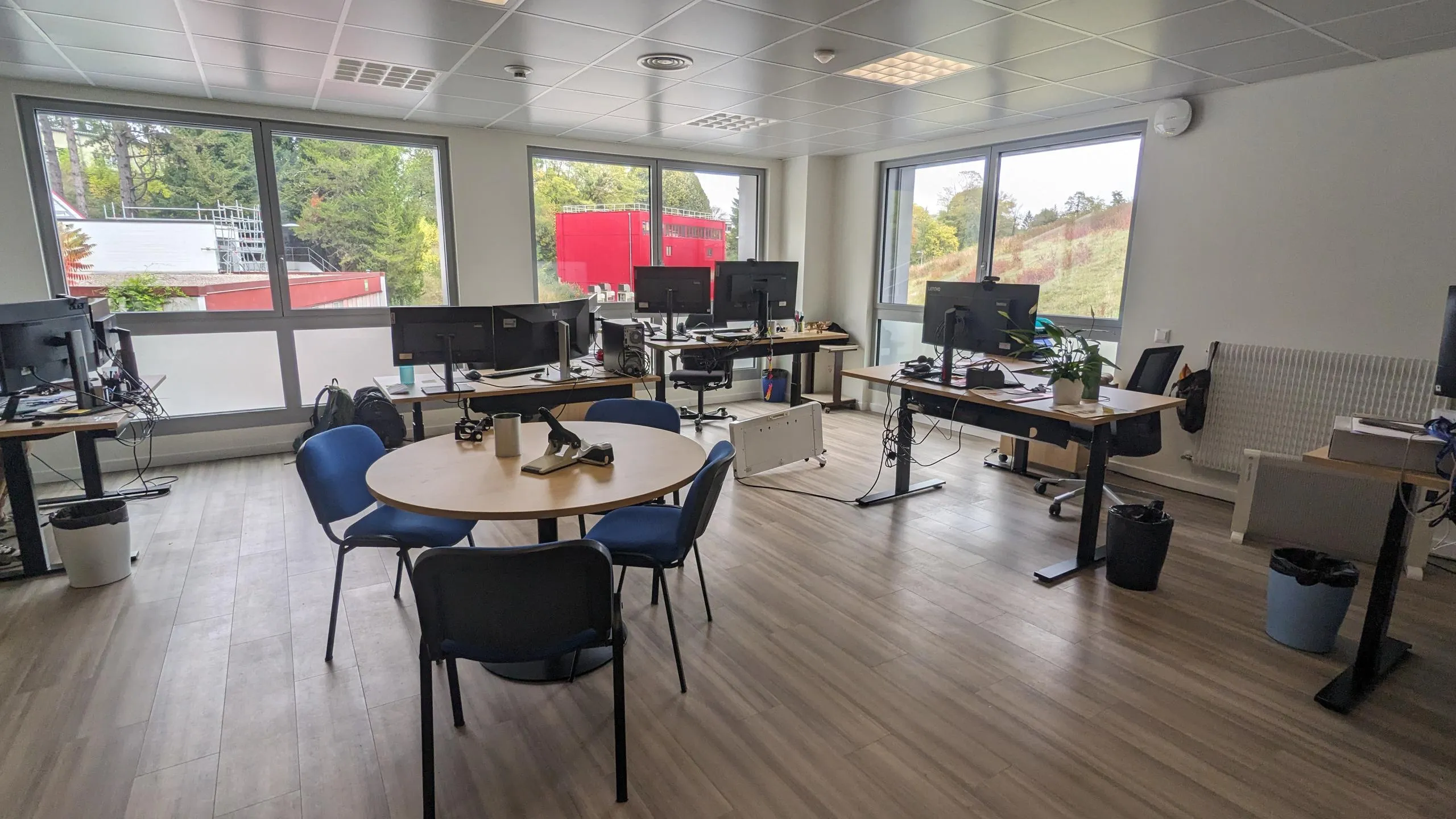
Today, the personnel working on the RWTC activities have happily settled into this new building with natural light, which affords clear separation combined with the necessary proximity to the centre. With these achievements, the RWTC team can take a bright view for the years ahead.
Back to top.
From spreadsheets to smart safety: the new CERN Safety Incident Management (SIM) tool
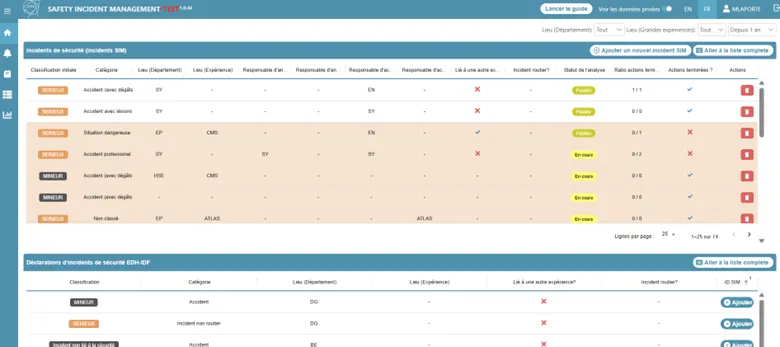
HSE has launched a new Safety Incident Management (SIM) tool — a major step forward in how the Organization records, analyses, and follows up on Safety Incidents, a term that covers everything from near misses to serious accidents.
Developed by the HSE-TS Safety Computing section, led by Gustavo Segura, with Marie Laporte as lead developer, the SIM tool brings together processes that are spread across departments in different formats and systems, and centralised by HSE-OHS. We met with them to understand how the tool came about and the challenges they met along the way.
Read the interview and discover the new tool here…
Q: Gustavo, what is the SIM tool and how did this project come about?
Gustavo: The Safety Incident Management, or SIM tool is a new CERN-wide application developed to centralise how we record, analyse and follow up on safety incidents. It responds to a key organisational need: a unified, efficient and secure way to manage incidents and the lessons we draw from them.
Until now, each department kept its own records — often in Excel sheets, shared drives or local databases. This made tracking incidents and consolidating data across the Organization extremely complex and manual, an arduous task our colleague Carine Pividori in the OHS Group has been overseeing for many years. The new CERN Safety Regulation SR-SIM (“Responsibilities in matters of Safety Incident management at CERN”), published in 2023, provided the framework for harmonising this process, and the SIM tool is the practical response to that rule. In this framework, Safety Incidents are classified as minor, serious or major, and the tool focuses on the first two categories.
The project was launched in 2024, following the work of a dedicated working group led by Andre Henriques to define the tool’s functional specifications. Completed in just 18 months, it went live in August 2025 after successful pilot testing with the EN and EP Departments and the ATLAS experiment. The effort was highly collaborative, involving representatives from departments, experiments, and HSE experts—including the CFRS and the CERN Medical Service—who contributed to shaping the tool’s requirements.
Q: Marie, can you tell us what the tool actually does?
Marie: The SIM tool records and manages all types of Safety Incidents — whether they involve people, the environment, electricity, cryogenics or any other technical domain. It’s designed mainly for HSE incident prevention tea m, Departmental Safety Officers (DSOs), LEXGLIMOS, and other safety experts, who, according to the SIM rules, are responsible for the analysis of Safety Incidents, the follow-up of corrective actions and Safety Incident statistics. The tool allows them to collect data, perform analyses and track actions, as well as share lessons learned.
It’s secure, user-friendly and interfaces with CERN systems such as EDMS and GIS for document management and precise incident localisation. Each incident follows a structured process: registration, analysis and reporting. Automated reports — such as “First Facts”, “Flash Info”, and “Safety Incident Reports” — make information sharing and follow-up much faster and more consistent.
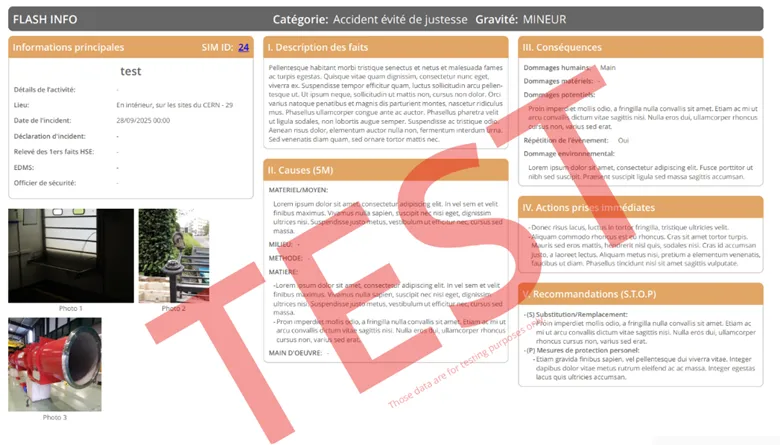
Example of a ‘Flash Info’ report
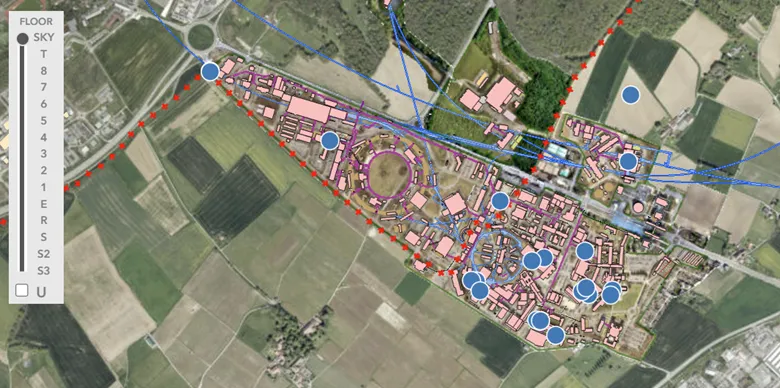
Example of the GIS interface view
Importantly, information is shared on a “need-to-know” basis to protect sensitive data. The system also includes automatic notifications to relevant users, who can then fill in the parts that concern them directly.
Q: What were some of the main challenges?
Gustavo: The biggest challenge was building consensus. People are busy, and testing a new system requires engagement and feedback. We held regular interactive meetings for every design mock-up to ensure we weren’t developing in isolation. Another challenge was data protection — we worked closely with the CERN Office of Data Protection to ensure the right level of security.
Q: What’s next for the SIM tool?
Marie: The tool is already being used for reporting and internal communication within departments and HSE. The next steps will be to extend its scope — for instance, to include Safety deviations or environmental alerts that are not yet captured. The goal is continuous improvement: better coverage, better quality of information, and faster feedback loops.
Gustavo: Integration is underway for the new occupational health information system for the medical service, called KENORA, which is already well advanced, and then the CFRS’ incident management tool will follow in 2026. The tool is already changing how people talk about incidents — we now say “SIM 12” or “SIM 33” in daily discussions. It’s become part of CERN’s Safety culture, helping us work more efficiently, consistently and, above all, safely. I have rarely seen such fast adoption and appreciation of a tool. It’s very satisfying and a great example of collaboration across HSE and CERN at large.
Back to top.
Making connections: HSE’s first cosmic ray detector
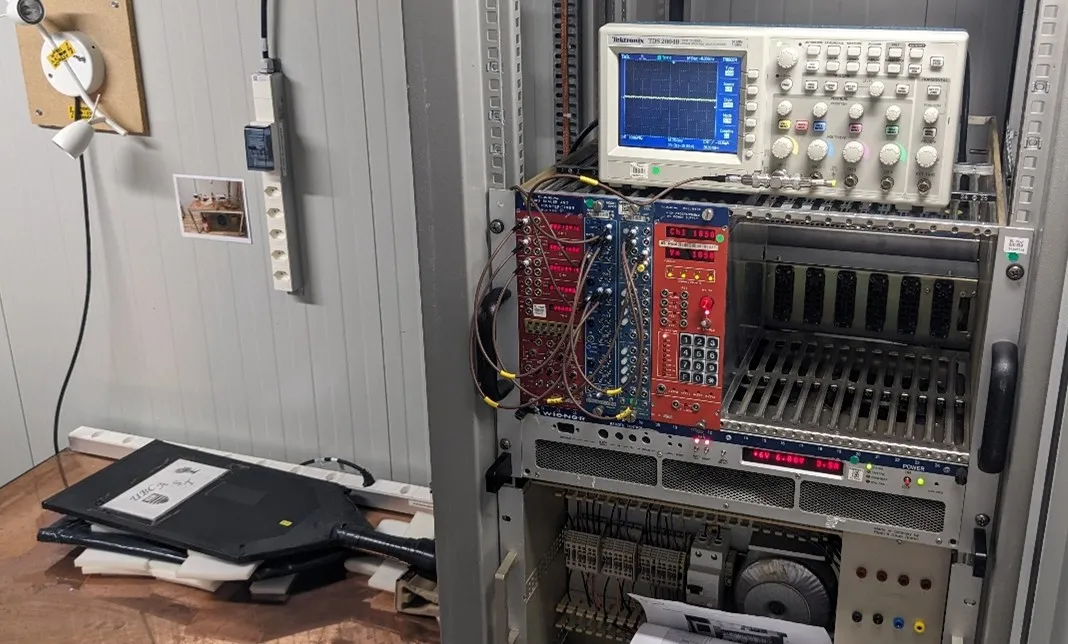
Finding good students can be as challenging as detecting cosmic rays, but luckily Igor Neuhold (HSE-OHS-IB) has a solution for both of these problems.
Learn more about the Danish student programme, HSE’s first cosmic ray detector, and how these two innovations have supercharged electrical safety at CERN…
Click here to make the connection…
To improve electrical safety inspections for short-term experiments, Igor has designed an electrical safety training aimed at CERN EP Users. For a hands-on experience he wanted to build a working particle detector, to show the Users best practices and common pitfalls in high voltage wiring. But who has the time, and the expertise, to build such a thing?
Enter Jonathan Mejenborg, a student Igor recruited via the Danish student internship programme. Studying a bachelor’s in technology management and marine engineering, Jonathan joined the electrical safety team for four months this summer. His project: to construct and create all the technical safety documentation for a cosmic ray detector as the icing on the cake for Igor’s electrical safety training course.
For Jonathan, the project will form a major part of his thesis, focusing on the safety design and lifecycle management of the device, while benefitting from immersion in the busy life of the electrical safety team and CERN’s international environment. For what concerns Igor, he gained a capable and motivated colleague to whom he could confidently delegate this important but challenging project.
The result: a high-quality demonstration tool for the Safety Training course, a memorable thesis, and strengthened connections between CERN and Danish technical institutes.
Jonathan’s has enjoyed the experience, noting, “Safety has always been part of the job. At CERN, I got to see how that’s handled on a whole different scale. I’ve learned a lot about risk assessment and communication, but also how different teams and cultures approach safety. It’s been a great experience — I’ll definitely take a lot from it.”
If you have a small project, or something that you can easily delegate to a qualified and competent student – definitely consider the Danish internship student programme.
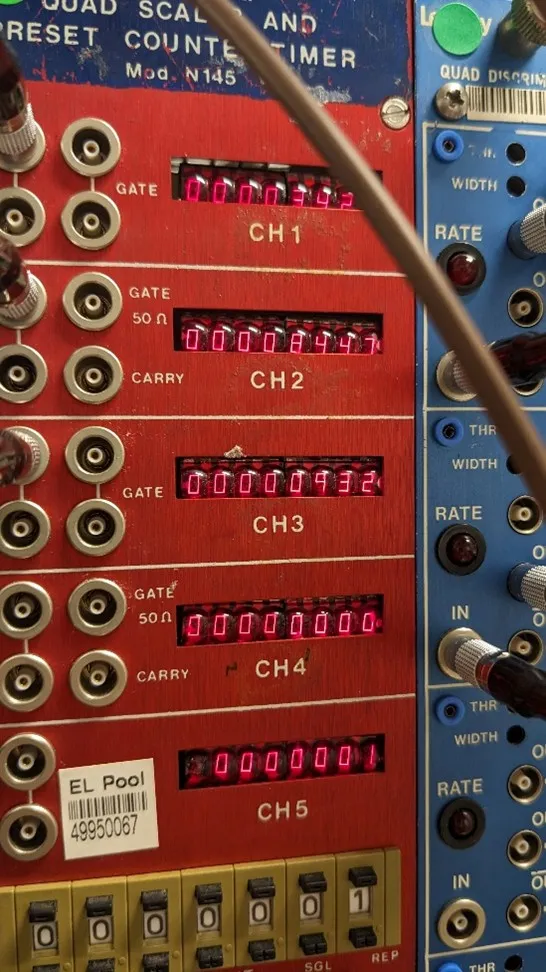
Channel 3 displays the number of cosmic rays detected.
Back to top.
Evacuation drill at the CFRS: the inside story
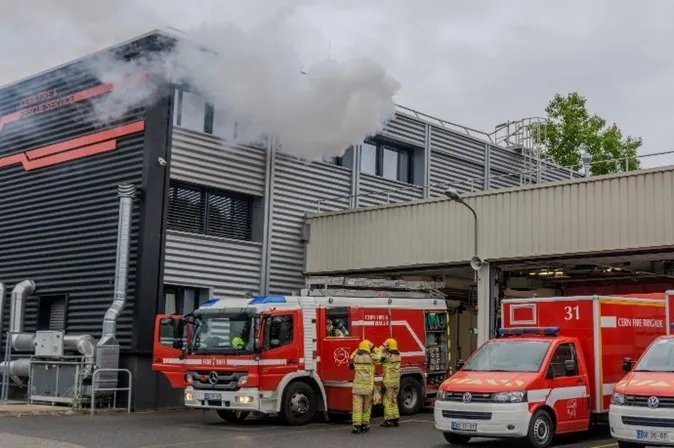
On 26 September, our firefighters experienced an entirely new type of exercise: an unforeseen evacuation drill in their own building. An overview of the event was published in the bulletin, but the most interesting details are reserved for us in HSE. We take you on a photo walk to find out more.
Click here to see the exercise…
1. What should happen?
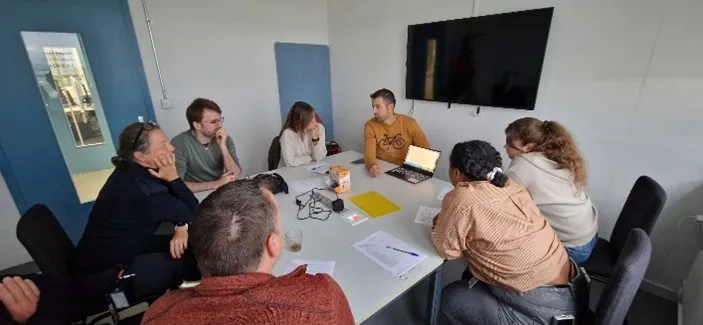
Organised in absolute secrecy by HSE DSO Gunnar Lindell, Fire Officer Sarah Hansen, and the building’s TSO Adrian Pedrosa Martinez, the evacuation exercise set out to answer two questions:
1. Did everybody know and understand the correct procedures in the event of a fire in the CFRS, and could these be improved?
2. Could the CFRS themselves maintain operational capability in the event of an emergency on their premises?
Here, the small team of observers is briefed on what should happen.
2. Is that someone shouting?
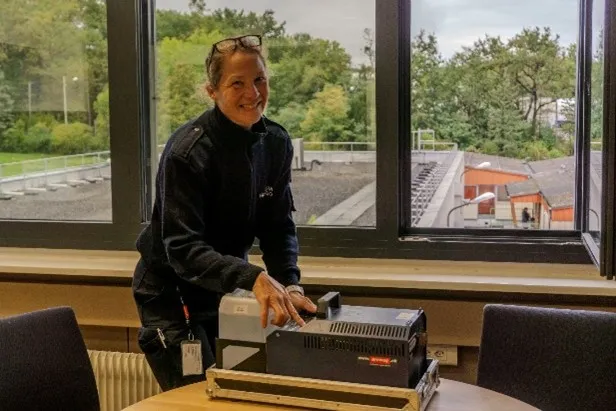
For historical reasons, the fire station is not fitted with a fire detection system or alarm: the only way to warn others of the “fire” is to shout!Sarah Hansen discreetly launched the exercise thanks to a smoke machine in the upstairs kitchen.
Once the danger was confirmed, the unmistakable message “Evacuate, Evacuate…” was broadcast via the station’s loudspeaker system.
3. Relocating the CFRS’ control room
Immediately, the CFRS control room staff packed up and rushed to the CCC in Prévessin, as per their protocol.
Control was re-established within ten minutes, and the team even handled an emergency call whilst in transit.
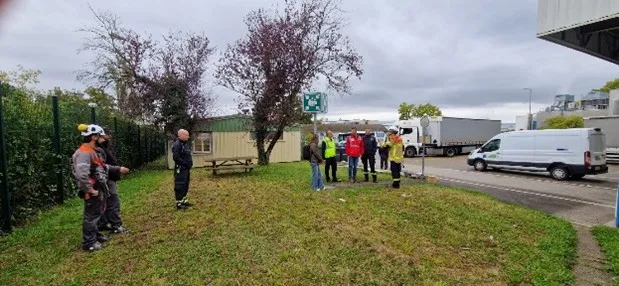
4. Evacuating the CFRS building
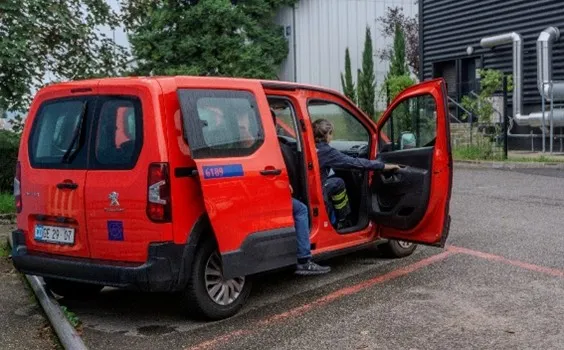
At the same time, Emergency Guide Eric Herbe searched the building, and safely guided all of the occupants to the assembly point: two off-duty firefighters, one of our observers, and some unfortunate contractors who had been cleaning the windows.
The value of a well-prepared and proactive emergency guide like Eric cannot be understated!
5. A rapid response
As the building was being cleared, the firefighters prepared to go in.
Interestingly, the firefighters immediately recognised the white smoke as “fake” but did not change their mindset. Today’s drill could be tomorrow’s real-life emergency.
Two firefighters were dispatched to identify the source of the problem.
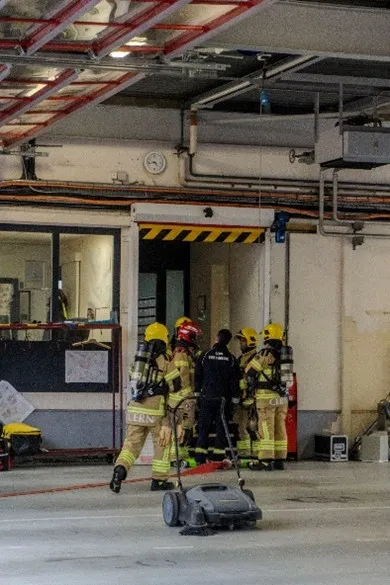
6. Teamwork
The CFRS responded just as they would for any other alarm.
Whilst reconnaissance was undertaken, other firefighters set up necessary intervention equipment. Two more searched other areas of the building for people who may have not evacuated.
In the event of a real fire at the station, or of multiple emergencies, the CFRS may also call upon the Host States emergency services for additional support.
7. Surprise!
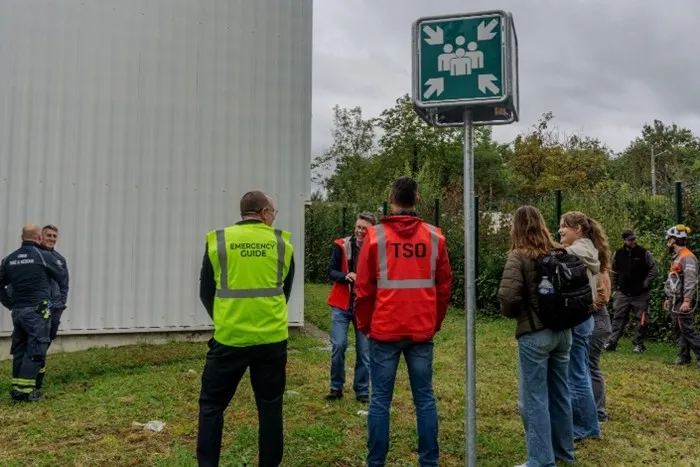
Back at the assembly point a jubilant Gunnar reassures the evacuees – and no doubt draws sighs from Eric and the firefighters – by revealing the exercise.
The observers and Safety Officers start to reflect on the process. Any initial worries were cast aside: it had gone better than anyone had imagined.
8. A return to our questions
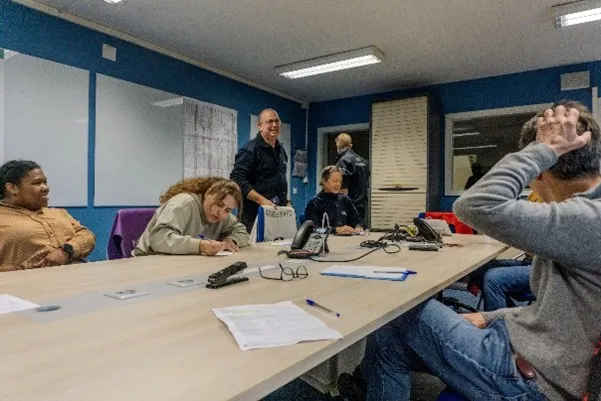
In the “RETEX” following the exercise, organisers and firefighters involved returned to the questions that this exercise set out to ask.
Did everybody know what procedure to follow? Yes, what’s more, the versatility and experience of the personnel involved allowed them to react appropriately to novel situations where the procedures were less clear.
Was operational capability maintained? Absolutely. The fire officers were ready to call upon the host states if needed, and the transition to the CCC was flawless.
The exercise was a success and served as an invaluable test of protocols and effectiveness for the CFRS.
Back to top.
Meet ABEILLE, the new ‘buzz’word in radioactive waste elimination pathways
In the course of its cutting-edge research, CERN generates different types of waste — conventional, hazardous and radioactive — each requiring its own dedicated management strategy. The Laboratory’s approach follows a key principle: minimise waste at the source, reuse when possible, and recycle or safely dispose of what remains.
When it comes to radioactive waste, CERN works under a clear framework established with its Host States, France and Switzerland, through the tripartite agreement on radiation protection and radiation safety. Waste is categorised as “candidate for clearance”, very low level (TFA), or low- and intermediate-level of short- (FMA-VC) and long-lived (FA-MA) nature. Depending on its level of activity, it follows different national disposal routes, ensuring a fair distribution between both countries.
In recent years, CERN has made major progress in the treatment and disposal of metallic FMA VC waste, which represents around 90% of its total low- and intermediate-level waste by volume. This waste, often bulky and complex to handle, requires innovative solutions to manage safely and efficiently.
Click to read what happens to this waste when it leaves CERN…
One such solution was launched through the Melting of Activated STeel (MAST) project, which established CERN’s first-ever metallic FMA elimination pathway by melting. The successful start of this process in 2023 marked a significant milestone in radioactive waste management at the Laboratory.
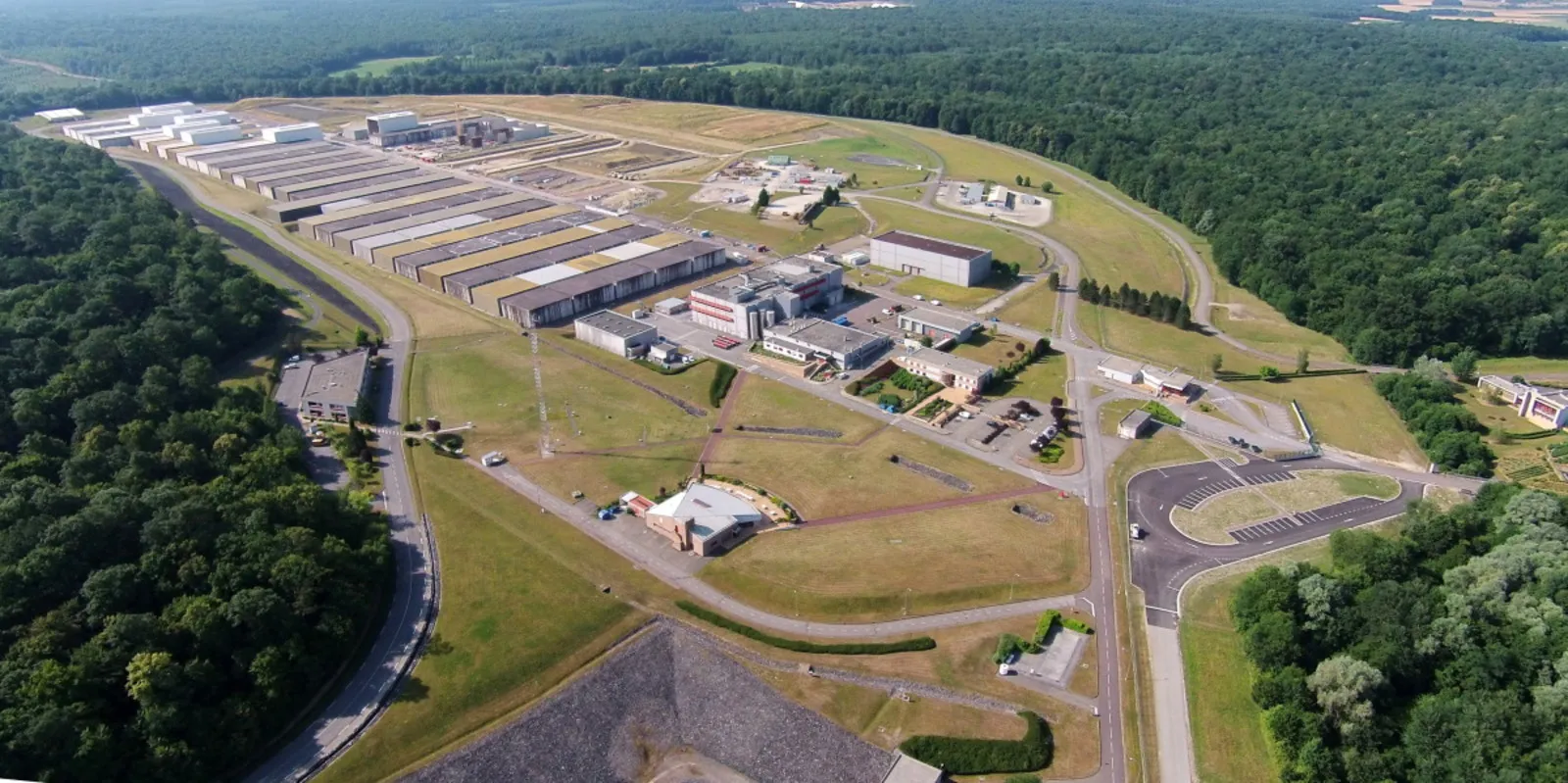
To complement MAST, a second pathway was developed for metallic waste unsuitable for melting — the ABEILLE project (ANDRA Bulky Elimination of Intermediate and Low-Level Waste), conducted in collaboration with the French waste management agency ANDRA.
Prior to being sent to the ANDRA CSA facility (Centre de stockage de l’Aube), CERN first has the challenge of characterising and packaging the waste items. Due to its significant radioactivity, handling FMA waste through the ABEILLE pathway poses significant radiation protection challenges and, unlike low-level RA waste—where volumes can be reduced by up to 50%—this process actually increases the volume of FMA waste by a factor of 2.5 to 5.
The reason is the complex packaging process: CERN must use specialised, heavily shielded containers to reduce dose rates during transport and final storage. For example, a container with an outer volume of 5 m³ only provides 2.6 m³ of usable space due to thick shielding. As a result, 30 m³ of waste packages can ultimately offer as little as 9 m³ of effective capacity.
What happens when the containers arrive at ANDRA? Containers have small orifices to which an injection gantry is coupled to inject mortar, a delicate operation with very little room for manoeuvre. Once the mortar is injected, containers become a huge block which are in turn placed into reinforced concrete vaults and, at a later stage, will be covered with earth — a safe, permanent solution for these materials.
After three years of development and an extensive approval process for this new pathway, CERN successfully sent and had its first ABEILLE waste (e.g. old LHC beam dump cores) received by ANDRA in 2025, officially opening this new elimination pathway. The goal is now to dispose of 5 to 40 m³ of metallic FMA waste per year, ensuring CERN continues to meet the highest standards of environmental and radiological responsibility.
Back to top.
Safety without borders: highlights from ITSF 2025
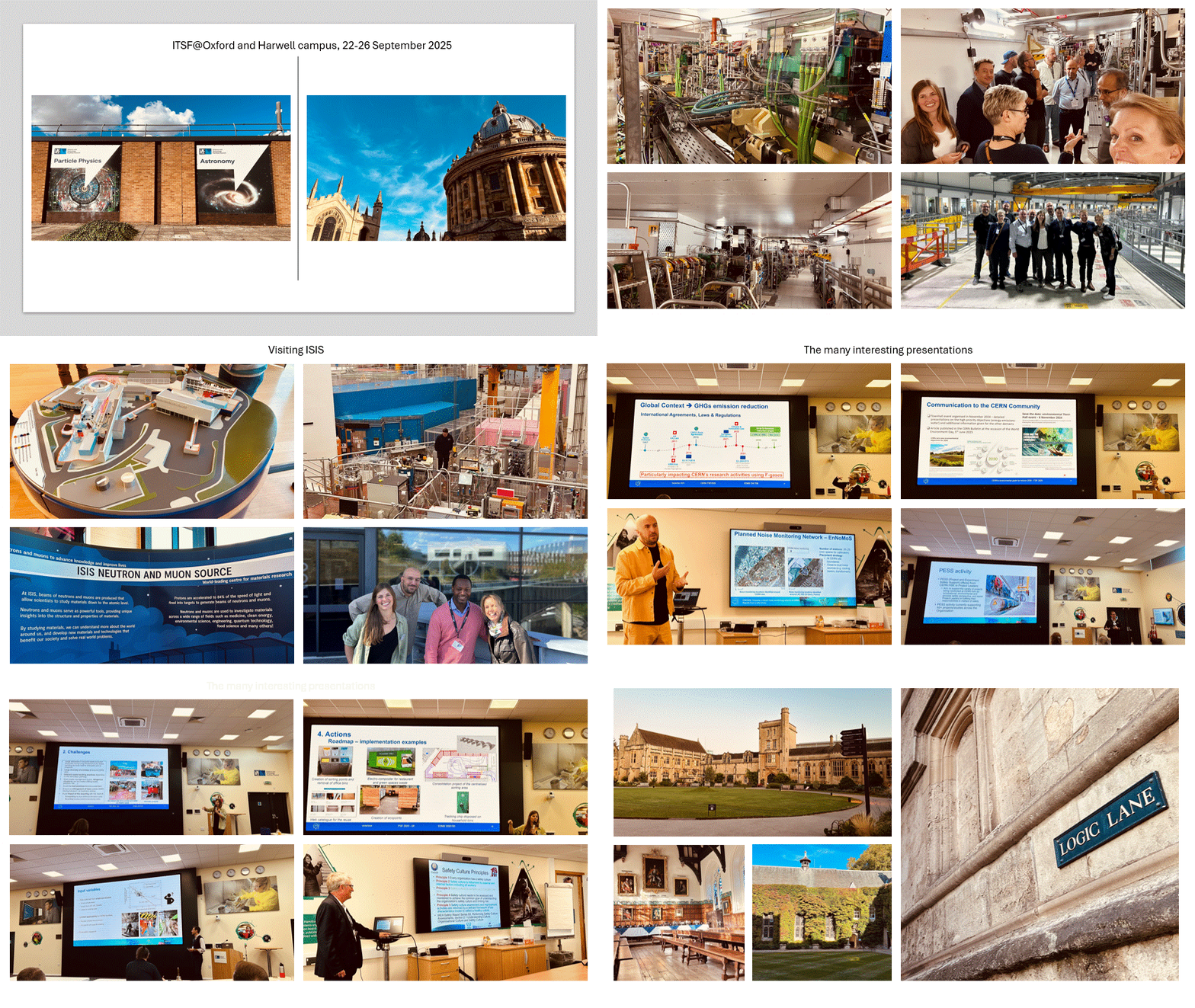
The 15th International Technical Safety Forum (ITSF) took place from 22–26 September 2025 at the Harwell Campus in the UK, home to the Diamond Light Source (DLS) and a vibrant cluster of cutting-edge research facilities. With over 70 participants on site and nearly 60 joining online, the event gathered safety experts from more than 16 laboratories worldwide to exchange experiences, present new approaches, and strengthen collaboration on technical safety challenges.
Click to see the conference highlights
In his keynote, Saverio La Mendola (Leader of CERN’s HSE-OHS Group) looked back at ITSF’s origins: launched in 1998 at CERN with just 16 participants from seven labs, it has since expanded to include synchrotrons, neutron sources, and other major research infrastructures. Despite a pause during COVID-19, the 2025 edition was the 15th meeting.
The programme included more than 50 oral presentations and 20 posters, spanning subjects from fire safety and emergency preparedness to laser protection, biological hazards, sustainability, and safety culture. CERN’s contributions featured talks on electrical risk management, laser training, noise monitoring, environmental goals, waste management, and lessons learned.
A highlight was a report on the FireLabNet initiative, which grew from a CERN-Fermilab spin-off in 2014 into a collaborative platform with 14 institutes today. It exemplified how ITSF fosters not only discussions but also lasting joint projects that improve safety across the research community.
Participants emphasised the value of sharing challenges as well as successes. As one participant put it: “When you put honesty in a presentation, everyone learns far more.”
Visits of the facilities of DLS, ISIS Muon and Neutron source and the Culham Centre for Fusion Energy gave ample opportunity to discover other practices and work environments.
As is customary at such conferences, a gala dinner was held at Exeter College in Oxford, a delightful venue for further informal exchanges. The opportunity to visit Oxford itself was the cherry on the cake, with its fascinating history, its many parks and churches, its oldest pub (1242), and of course its 39 colleges whose unique style and architecture.
Reflecting on the event, Saverio noted “I believe this edition of the ITSF was particularly successful, fully meeting our objectives of facilitating open exchanges on a wide range of technical safety topics, from specific domains to safety culture and communication. This was made possible thanks to the vibrant ITSF community, whose active contribution was essential, and to the excellent preparatory work of Guy Thomas and the entire local organising committee from the Diamond Light Source, STFC (RAL) and UKAEA Culham Centre for Fusion Energy. I look forward to the next conferences as opportunities to further strengthen our community of safety professionals, creating synergies and building lasting relationships.”
Back to top.
EIROforum Safety Officers’ Meeting: Sharing knowledge across Europe
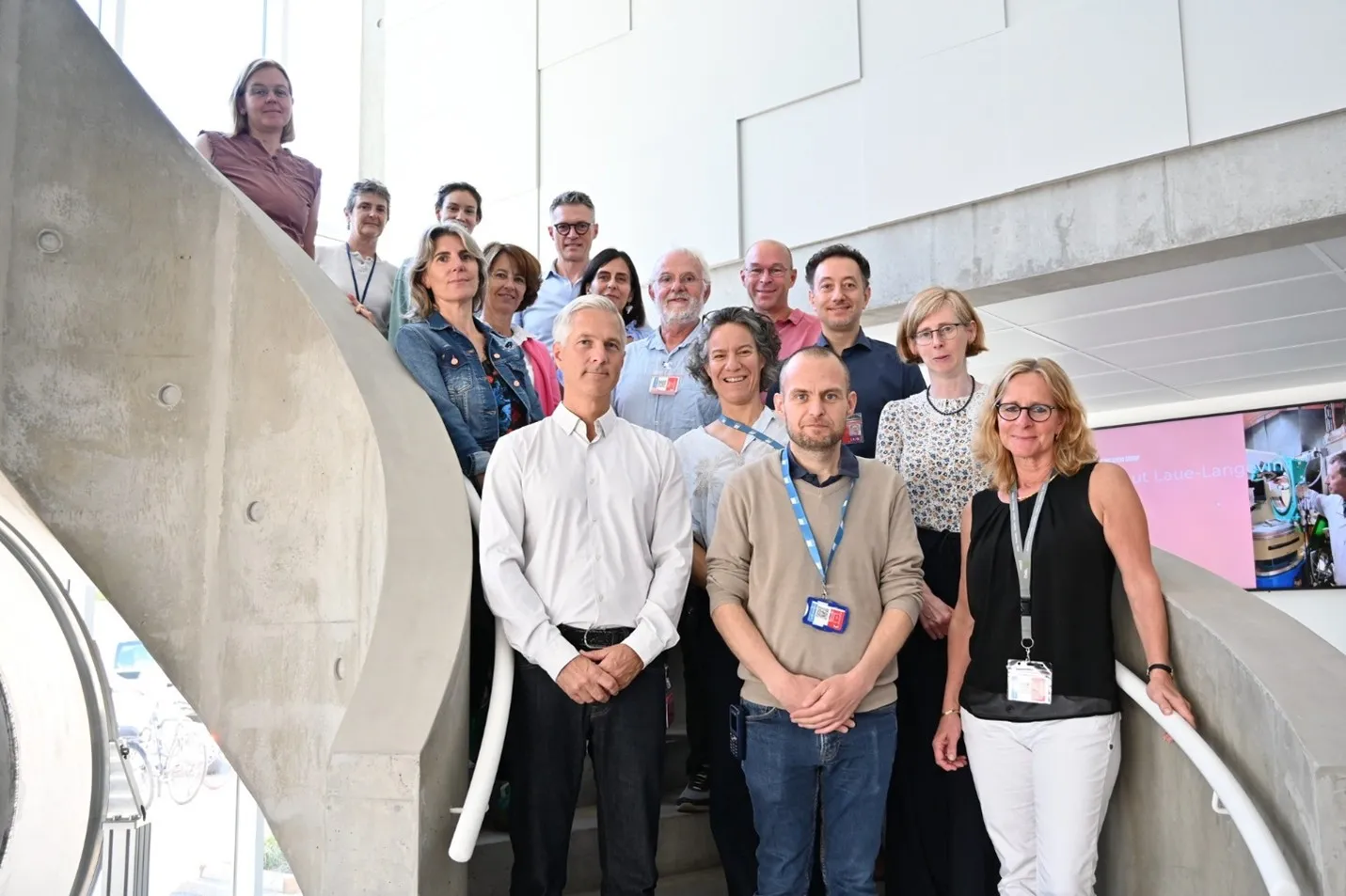
On 18–19 September 2025, representatives from HSE units from Europe’s leading research organisations gathered at the Institut Laue-Langevin (ILL) in Grenoble for the annual EIROforum Safety Working Group meeting. Co-chaired by Saverio La Mendola (CERN) and Corinna Gorny (EMBL), the forum once again proved to be an invaluable platform for exchanging experience, comparing practices, and tackling common challenges in safety management.
Launched in 2011, the meeting has been hosted in rotation by EIROforum members, with the European Spallation Source (ESS) invited since 2016. This year, 15 participants took part in the 1.5-day event, continuing a tradition of open exchange.
Click to discover the meeting highlights
As previous editions the Grenoble meeting combined thematic discussions with practical site visits, including a tour of ILL’s instruments hall, nuclear research reactor, and wider campus. The thematic discussions explored diverse topics ranging from workplace ergonomic design and contractor safety management to lessons learned from major incidents and accident reporting. Safety culture, compliance, and the effective use of personal protective equipment (PPE) also featured prominently.
Looking ahead, CERN will host the next meeting in autumn 2026. With the Laboratory entering Long Shutdown 3 (LS3), participants will have a rare opportunity to visit CERN’s underground facilities, including tunnels and large experiments, during machine cooldown.
Proposed themes for the CERN edition include risk assessment, management of gases, and innovative formats for safety training. Discussions will also tackle the challenges of the regulatory framework for International Organisations and comparing accident statistics to identify best practices and systemic issues across institutions.
As always, the spirit of the forum is one of openness: when participants share candidly, everyone learns more. With its combination of technical depth, real-world lessons, and collaborative spirit, the EIROforum Safety Working Group meeting continues to set a high standard for cross-institutional safety exchange in Europe.
Back to top.
Sharing CERN’s environmental commitment with 2050Today partners
CERN is an active member of 2050Today, “the Geneva climate action forum that brings together international organisations, diplomatic missions, academic institutions and civil society to take measurable action against climate change by reducing greenhouse gas emissions.”
As part of this collaboration, HSE-ENV and colleagues from other CERN departments regularly contribute to thematic working groups on energy, mobility (including duty travel), waste, biodiversity and food.
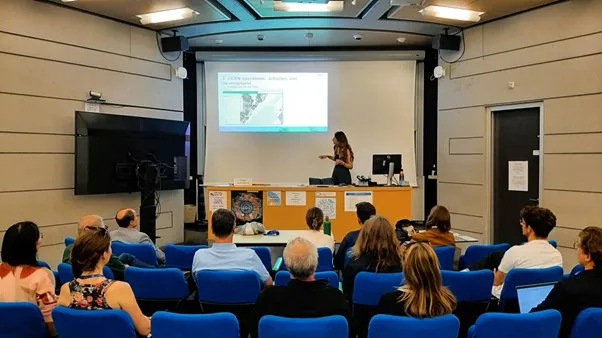
On 17 September, HSE-ENV welcomed representatives from fellow 2050Today partner organisations – including the ILO, the Graduate Institute, and the United Nations – for a dedicated visit to CERN on the theme of Biodiversity. The day featured presentations showcasing the Laboratory’s commitment to reducing its environmental footprint and promoting biodiversity across its sites.
Follow the highlights of the visit here…
Guests learned about CERN’s diverse environmental initiatives, from biodiversity inventories, urban heat island studies and light pollution monitoring, to collaborations with the Office National des Forêts (ONF), the installation of swift nesting boxes, birdsong sensors, and the creation of a new hedge near Building 40 designed to enhance local ecosystems.
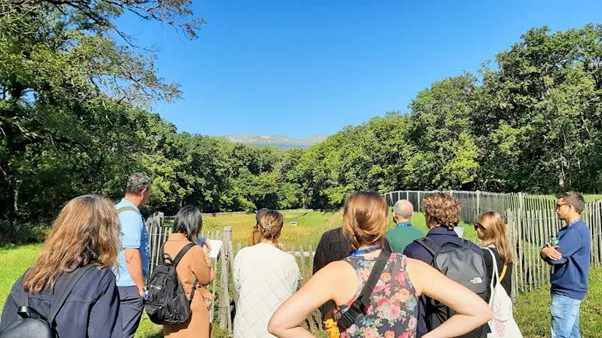
The highlight of the day was a field visit to Prévessin, where participants discovered CERN’s range of natural habitats and on-site biodiversity actions: water retention basins, green roofs, the orchid relocation project, the resident sheep flock, and the forests and meadows that enrich CERN’s landscape.
The visit inspired lively discussions and strengthened the shared commitment to environmental stewardship within the 2050Today network, offering visitors a fresh perspective on CERN’s lesser-known but vital role as a responsible actor in environmental protection.
Back to top.
Modernising waste management: refurbishing “Zone 133”
Waste management is one of the key domains of CERN’s efforts to minimise its impact on the environment. At the heart of this, the Storage, Recuperation and Sales Service, managed by the SCE department, has played a key role for many years in the refuse, reduce, reuse, recycle strategy.
Located in building 133, also referred to as “Zone 133” the service prepares for reuse or recycling, and sortes into the right channels. The service also manages resale or donation of any equipment that CERN no longer needed.
For several months, the service has temporarily been relocated while a transformation takes place…
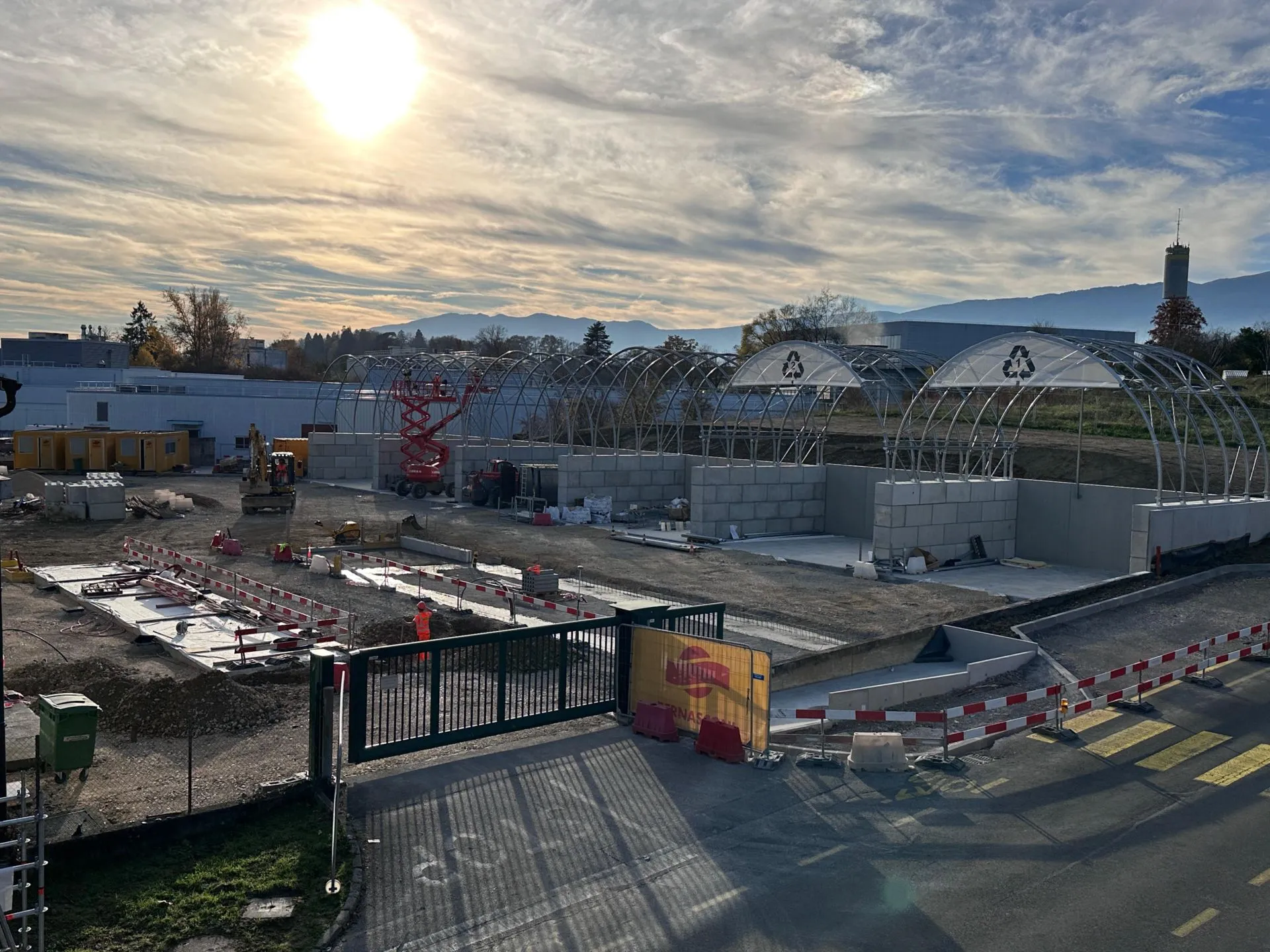
Read about the future of the facility here…
In 2024, CERN approved ambitious plans to refurbish “Zone 133”, marking a significant step toward enhancing safety, efficiency, and environmental protection in waste management. The project, launched in 2025, aims to expand the zone’s surface area, upgrade its infrastructure, and bring it in line with the highest standards of safety—including environmental protection.
Funded by the CERN Environmental Protection Steering Board (CEPS), the project includes the construction of domes to prevent leaching, an upgraded drainage network, and improved firewater retention systems. Logistical improvements, such as covered storage and a new weighing station for trucks, are also part of the plan.
Sabrina Schadegg and Arnaud Kolzer from the HSE-ENV group have been working hand in hand with SCE to coordinate all aspects related to environmental compliance. The refurbishment addresses long-standing challenges, such as the management of non-compliant waste streams, particularly sludge with high concentrations of metals and carbon pollutants, identified in 2023.
And the project had a surprise in store: several months in, it was decided to integrate the chemical waste temporary storage activities located in Building 262. The change of scope made for a challenging cocktail to ensure all chemical and fire safety requirements could fit in the existing plans.
The HSE-OHS chemical experts Iqra Shahzadi and Jonathan Gulley provided advice for safe storage and other requirements. They worked fast to ensure all considerations spanning storage, ventilation, classification, segregation, spill retention, and mitigation measures such as emergency showers were taken into account in the layout and features of the new zone.
With completion scheduled for Long Shutdown 3, this collaboration between SCE, HSE-ENV, and HSE-OHS teams will lead to a more practical area with centralised waste management activities, optimising space and workflow, ensuring that the refurbishment meets current operational needs, safety standards and sustainable waste management requirements.
Back to top.
When science meets nature: lichenologists go on a quest at CERN
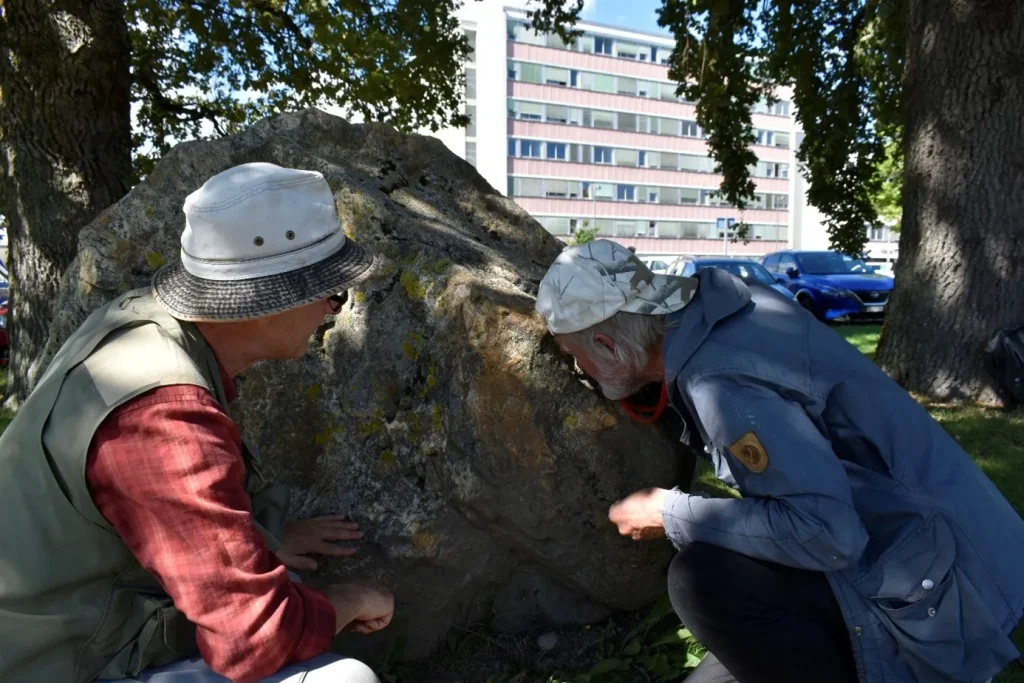
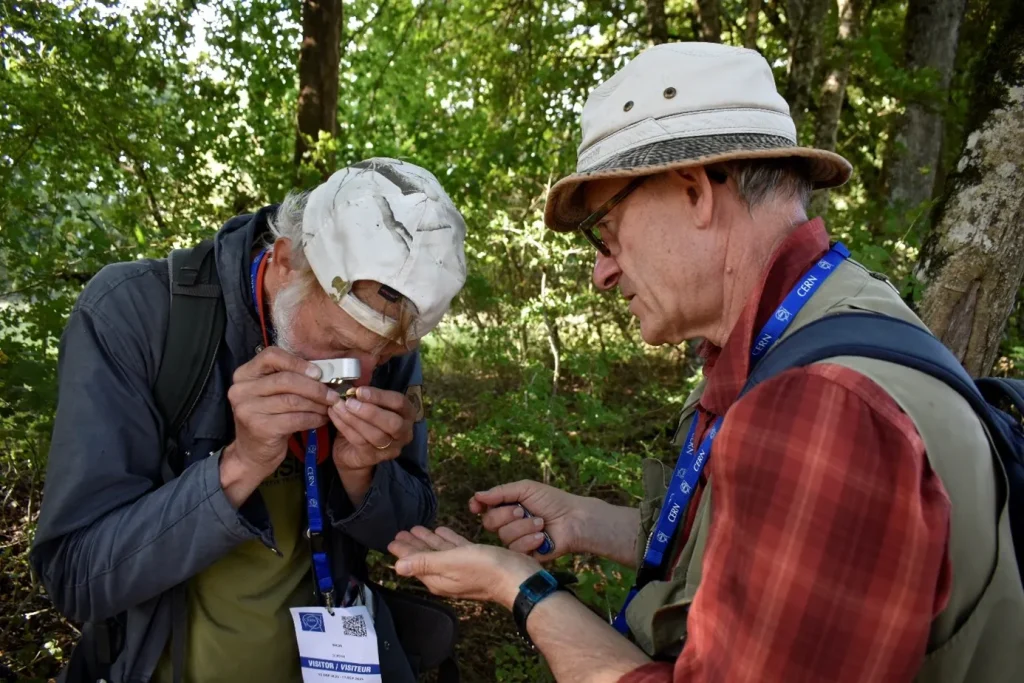
CERN hosts a wide variety of flora and fauna and ensures the preservation of this rich biodiversity through a variety of measures, coordinated by the HSE-ENV group in collaboration with SCE. Lichens are not one organism but instead a community of many different organisms. They consist of a partnership (symbiosis) between one or more fungi (mainly ascomycetes and basidiomycetes), green algae or cyanobacteria and diverse communities of other bacteria. Lichens are a group with various important ecosystem functions which occur in a variety of environments on bark and wood of trees as well as on rocks and soil… including at CERN! As they are sensitive to e.g. air- and water pollution, agriculture and forestry, they are precious bioindicators.
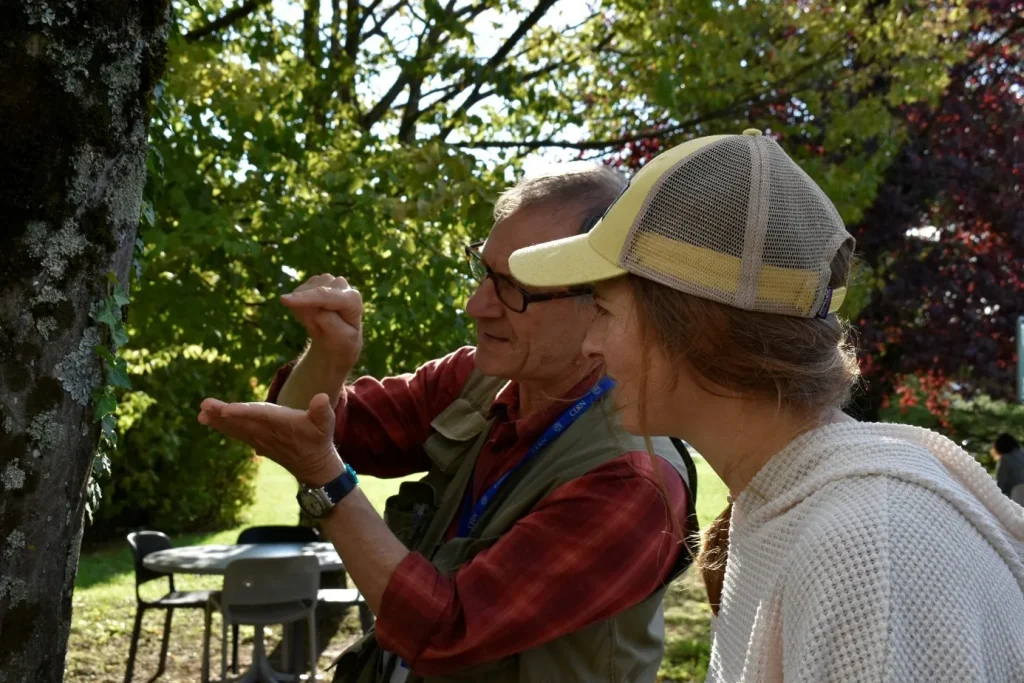
From 15 to 17 September this year, the HSE-ENV group welcomed two passionate lichenologists on the CERN site. One of them, Mathias Vust had already visited CERN some 10 years ago to identify species of lichen that feature on the Swiss Red List of endangered species and was happy to return following a recent inventory in Meyrin. The other, Göran Thor from the Swedish University of Agricultural Sciences, Sweden, spontaneously contacted CERN to take advantage of a visit to his son, enquiring about the possibility of seeing the lichen species here for himself. Over three days these two visitors observed and took samples around Meyrin, Prévessin and various points of the LHC. This resulted in around 100 species inventoried, a great addition to a growing list of species.
Back to top.